
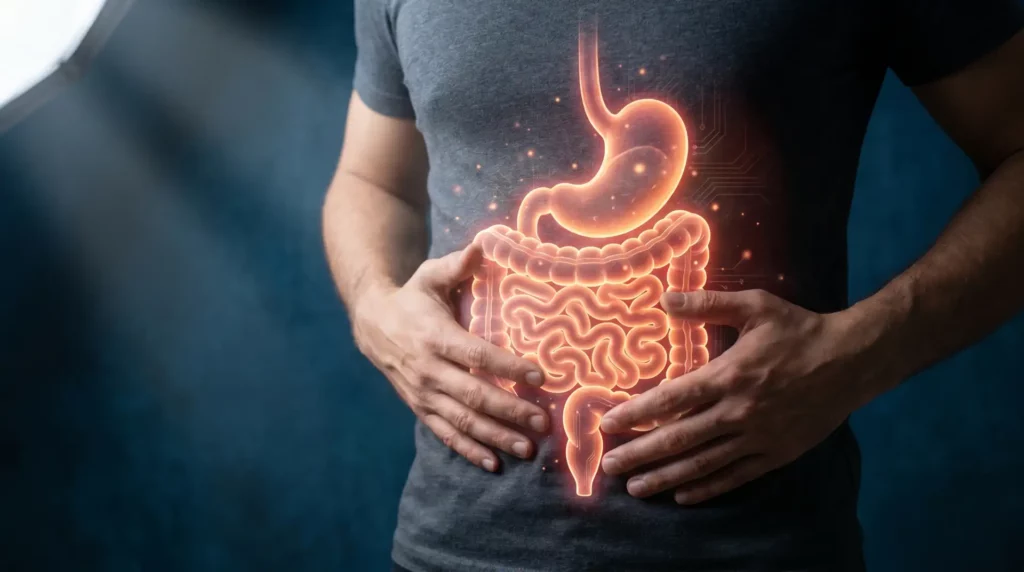
Nutrition, the Microbiome & Gut Health: An Evidence-Based Guide
Your gut is home to trillions of microorganisms – collectively known as the gut microbiome – that play an important role in your immunity1, as well as influencing metabolism2,3 and even mood through the gut-brain axis4.
What Is the Gut Microbiome?
The gut microbiome refers to the vast community of bacteria, archaea (complex micro-organisms similar to bacteria in shape and size), and viruses that live primarily in your gastro-intestinal (GI) tract1,2. These microbes aren’t just passive passengers – they actively influence your health5.
Research shows the microbiome is involved in:
- Digesting food3
- Producing vitamins (like vitamin K and some B vitamins)1
- Maintenance of the immune system2
- Communicating with the brain via the gut-brain axis4
An imbalance in this ecosystem is called dysbiosis. Dysbiosis has been linked to conditions like obesity, irritable bowel syndrome (IBS), type 2 diabetes, and other metabolic disorders2,4,5.
How Nutrition Shapes Your Gut
- Fiber
Dietary fiber is one of the most important components for a diverse microbiome. Unlike other nutrients, fiber isn’t digested by your body – it’s fermented by gut bacteria3,6.
This fermentation produces short-chain fatty acids (SCFAs) like butyrate, which:
- Helps with inflammation3
- Strengthen the gut lining (a.k.a the intestinal epithelial barrier)3
- Support metabolic health2,3
Diets high in fiber are consistently associated with increased microbial diversity—a key marker of gut health6.
- Diversity Matters More Than Perfection
One of the strongest findings in microbiome research is this: The more diverse your diet, the more diverse your gut bacteria7.
A landmark study found that people who ate 30+ different plant foods per week had significantly more diverse microbiomes than those who ate fewer than 107.
Greater diversity is linked to:
- Immune function maintenance3
- Possible GI inflammatory mediation8
- Fermented Foods: Feeding Good Bacteria
Fermented foods are foods and beverages that have undergone controlled microbial growth and fermentation9; these foods have been shown to support gut health10.
Examples include:
- Yogurt10
- Kefir10
- Sauerkraut10
- Kimchi10
A randomized controlled trial showed that a diet high in fermented foods increased microbiome diversity and reduced inflammatory markers10.
- Prebiotics
Prebiotics are specific types of fiber that aid beneficial bacteria11,12.
Key sources include:
- Garlic11
- Onions11
- Leeks11
- Asparagus11
- Bananas11
Prebiotics help beneficial bacteria thrive, in turn these bacteria help keep us healthy11,12.
- Ultra-Processed Foods: A Gut Disruptor
Diets high in ultra-processed foods (UPFs) – like packaged snacks, sugary drinks, and fast food – are linked to reduced microbial diversity and low grade inflammation13.
These foods often:
- Are low in fiber13
- Contain additives that may disrupt gut bacteria13,14
- Promote the growth of less beneficial microbes13
- Fat and the Microbiome
High intake of saturated fats may be associated with:
- Reduced beneficial bacteria8
- Inflammation8

The Gut-Brain Connection
Your gut and brain are constantly communicating via the gut-brain axis. Gut bacteria produce neurotransmitters like serotonin, which influence mood and mental health4.
Practical, Evidence-Based Tips for Better Gut Health
You don’t need a complicated plan—just consistent habits:
- Eat more plants → Eat a variety of plant foods weekly7
- Increase fiber gradually → Increasing fiber intake rapidly may cause bloating6
- Include fermented foods daily → Even small amounts help10
- Limit ultra-processed foods → Focus on whole, real foods13
- Manage mood → This impacts gut health significantly4
The information provided in this blog post is based on the professional opinion of Nutrifundi dietitians and is intended solely for educational purposes. It is not meant to replace professional medical advice, diagnosis, or treatment. We encourage readers to consult health care providers for personalised advice and treatment options related to their specific health concerns. IN5779/26
References:
- Thursby E, Juge N. Introduction to the human gut microbiota. Biochem J. 2017.
- Tilg H, Moschen AR. Microbiota and diabetes. Nat Rev Gastroenterol Hepatol. 2014.
- Koh A, et al. From dietary fiber to host physiology: short-chain fatty acids. Cell. 2016.
- Cryan JF, et al. Gut microbiota and brain function. Physiol Rev. 2019.
- Lynch SV, Pedersen O. The human intestinal microbiome in health and disease. N Engl J Med. 2016.
- Makki K, et al. The impact of dietary fiber on gut microbiota. Cell Host Microbe. 2018.
- McDonald D, et al. American Gut Project. mSystems. 2018.
- Singh RK, et al. Diet and gut microbiome interactions. J Transl Med. 2017.
- Rapson, J. 2018, ‘Fermented foods: The latest trend’, Heart Foundation NZ, 20 August. Available at: https://www.heartfoundation.org.nz/about-us/news/blogs/fermented-foods-the-latest-trend (Accessed: 18 May 2026).
- Wastyk HC, et al. Fermented foods and microbiome diversity. Cell. 2021.
- Slavin J. Fiber and prebiotics: mechanisms and health benefits. 2013;5(4):1417–1435.
- Catanese L. Prebiotics: Understanding their role in gut health [Internet]. Harvard Health Publishing; 2024 May 15 [cited 2026 May 18]. Available from: https://www.health.harvard.edu/nutrition/prebiotics-understanding-their-role-in-gut-health
- Spiller AL, et al. Ultra-Processed Foods, Gut Microbiota, and Inflammatory Bowel Disease: A Critical Review of Emerging Evidence. 2025;17(16):2677.
- Whelan K, Bancil AS, Lindsay JO, et al. Ultra-processed foods and food additives in gut health and disease. Nat Rev Gastroenterol Hepatol. 2024;21:406-427. Available from: https://www.nature.com/articles/s41575-024-00893-5