

For many women, the years leading up to and after menopause bring a frustrating surprise: weight gain — especially around the belly — even if nothing in your lifestyle has changed. Rest assured, this weight gain is not just in your imagination, nor is it simply about willpower. Real biological changes during the menopausal transition make your body store and burn energy differently1. The good news? With the right strategies, you can absolutely regain control.
What’s Really Happening During Menopause?
Menopause marks the natural end of menstrual cycles, and the lead-up to it comes with a sharp drop in estrogen. That hormone shift doesn’t just affect periods — it affects metabolism, fat storage, sleep, mood, muscle, and appetite regulation2,3,4.
Let’s break down the main drivers of menopausal weight gain, in everyday terms.
- Reduced Estrogen Changes Where Your Body Stores Fat
As estrogen drops, the body tends to store more fat in the abdomen – particularly visceral fat, the deeper type that surrounds internal organs1.
This shift isn’t your imagination. Studies show that menopause itself (not just aging) pushes fat toward the belly, which increases the risk of metabolic issues1,2.
- You Burn Fewer Calories at Rest
Around midlife, muscle mass naturally decreases — and muscle is a major calorie-burner. When you lose muscle, your resting metabolism slows down, meaning you burn fewer calories even while sitting or sleeping3.
What this means is if your calorie intake remains the same but your metabolism slows down, weight gain can occur. This is due to biological changes, not personal failure3.
- Sleep Disruptions, Stress, and Hot Flashes Increase Appetite
Night sweats, insomnia, and mood changes are incredibly common during menopause. Poor sleep affects hunger hormones and increases food intake — especially at night, in excess of the calories that are needed daily4.
Many women eat more during the day simply because their sleep quality has been poor. Addressing sleep issues or improving sleep quality can therefore directly support weight management4.
- Aging Still Plays a Role — But Menopause Adds Its Own Challenges
Research shows that normal aging and the hormonal shift of menopause contribute to weight gain1,5. Aging lowers activity levels and muscle mass3; menopause changes fat-distribution changes and sleep issues1,4. The combination makes weight gain more likely.
Putting It All Together
Menopausal weight gain is common — but not unavoidable.
A realistic, science-supported plan looks like this:
- Eat more protein at every meal
- Do strength training several times a week
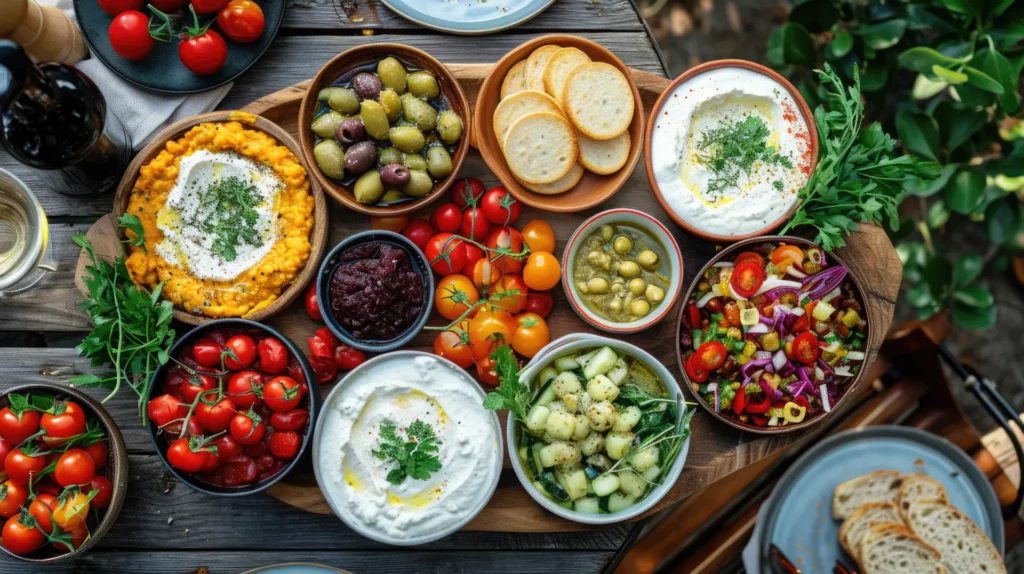
- Follow a Mediterranean-style eating pattern
- Boost fiber daily
- Limit alcohol and refined carbs
- Improve sleep and manage symptoms
Small, consistent changes can lead to major improvements in body composition, energy levels, and long-term health. You are not “fighting your body.” You’re working with it — using tools that are proven to help.
The information provided in this blog post is based on the professional opinion of Nutrifundi dietitians and is intended solely for educational purposes. It is not meant to replace professional medical advice, diagnosis, or treatment. We encourage readers to consult health care providers for personalised advice and treatment options related to their specific health concerns. IN5432/25
References:
- Lovejoy, J. C., Champagne, C. M., de Jonge, L., Xie, H., & Smith, S. R. (2008). Increased visceral fat and decreased energy expenditure during the menopausal transition. International Journal of Obesity, 32(6), 949–958. https://doi.org/10.1038/ijo.2008.25
- Zhu, J., Zhou, Y., Jin, B., & Shu, J. (2023). Role of estrogen in the regulation of central and peripheral energy homeostasis: From a menopausal perspective. Therapeutic Advances in Endocrinology and Metabolism, 14, 1–22. https://doi.org/10.1177/20420188231199359
- Hodson, L., Harnden, K., Roberts, R., Dennis, A. L., Frayn, K. N., & Karpe, F. (2014). Lower resting and total energy expenditure in postmenopausal compared with premenopausal women matched for abdominal obesity. Journal of Nutritional Science, 3, e4. https://doi.org/10.1017/jns.2014.3
- Kravitz, H. M., Kazlauskaite, R., & Joffe, H. (2018). Sleep, health, and metabolism in midlife women and menopause: Food for thought. Obstetrics and Gynecology Clinics of North America, 45(4), 679–694. https://doi.org/10.1016/j.ogc.2018.07.008
- Kuo, Y.-Y., Chang, H.-Y., Huang, Y.-C., & Liu, C.-W. (2022). Effect of whey protein supplementation in postmenopausal women: A systematic review and meta-analysis. Nutrients, 14(19), 4210. https://doi.org/10.3390/nu14194210
- Ribeiro AS, Pereira LC, Schoenfeld BJ, Nunes JP, Kassiano W, Nabuco HCG, Sugihara Junior P, Fernandes RR, Antunes M, Aguiar AF, Cyrino ES. Moderate and Higher Protein Intakes Promote Superior Body Recomposition in Older Women Performing Resistance Training. Med Sci Sports Exerc. 2022 May 1;54(5):807-813. doi: 10.1249/MSS.0000000000002855
- Khalafi M, Habibi Maleki A, Sakhaei MH, Rosenkranz SK, Pourvaghar MJ, Ehsanifar M, Bayat H, Korivi M, Liu Y. The effects of exercise training on body composition in postmenopausal women: a systematic review and meta-analysis. Front Endocrinol (Lausanne). 2023 Jun 14;14:1183765. doi: 10.3389/fendo.2023.1183765.
- Lombardo, M., Perrone, M. A., Guseva, E., Aulisa, G., Padua, E., Bellia, C., Della-Morte, D., Iellamo, F., Caprio, M., & Bellia, A. (2020). Losing weight after menopause with minimal aerobic training and Mediterranean diet. Nutrients, 12(8), 2471. https://doi.org/10.3390/nu12082471
- Jovanovski E, Mazhar N, Komishon A, Khayyat R, Li D, Blanco Mejia S, Khan T, Jenkins AL, Smircic-Duvnjak L, Sievenpiper JL, Vuksan V. Effect of viscous fiber supplementation on obesity indicators in individuals consuming calorie-restricted diets: a systematic review and meta-analysis of randomized controlled trials. Eur J Nutr. 2021 Feb;60(1):101-112. doi: 10.1007/s00394-020-02224-1
- Zheng, D., Yuan, X., Ma, C., Liu, Y., VanEvery, H., Sun, Y., Wu, S., & Gao, X. (2021). Alcohol consumption and sleep quality: a community-based study. Public Health Nutrition, 24(15), 4851–4858. https://doi.org/10.1017/S1368980020004553
- Bjarnadottir, A. 2023. Why refined carbs are bad for you. Healthline. https://www.healthline.com/nutrition/why-refined-carbs-are-bad. Date accessed: 2 December 2025